Habits & Behavior Change - Techniques for Transforming Your Life Through Persistence
By learning scientifically proven habit formation methods, you can effortlessly continue desired behaviors and gain the power to fundamentally change your life.
About Habits and Behavior Change
About 40% of our daily behaviors are composed of habits. The accumulation of behaviors we repeat unconsciously from waking up in the morning to going to bed at night greatly affects the quality of our lives in the long term. Understanding the mechanism of habits and learning how to intentionally design them is an extremely important skill for self-growth.
The Science of Habit Formation
Habits are composed of four elements: "cue," "craving," "response," and "reward." By understanding this loop, you can strategize to build good habits and break bad ones.
What's important is that habit formation doesn't require willpower but proper system building. By designing your environment, lowering the barriers to action, and accumulating small successful experiences, anyone can establish desired habits.
Why Changing Behavior is Difficult
The reason many people fail at behavior change is that they try to make big changes all at once. The brain dislikes change and prefers to maintain the status quo. To overcome this resistance, an approach that minimizes change and links new behaviors to existing habits is effective.
"If you improve by 1% every day, you'll be 37 times better in a year." - James Clear
Recommended Books
We introduce books that provide practical methods based on scientific evidence for habit formation and behavior change. These books provide specific techniques that can be implemented from the day you read them and support continuous behavioral change.
Atomic Habits
This book systematizes the science of habit formation and presents methods for accumulating 1% daily improvements like compound interest. You can learn specific strategies for establishing desired habits through environmental design and systematizing behavior without relying on willpower. By understanding the four steps of habits (cue, craving, response, reward), you acquire techniques for increasing good habits and breaking bad ones.

ジェームズ・クリアー式 複利で伸びる1つの習慣 (フェニックスシリーズ)
ジェームズ・クリアー, 牛原 眞弓 / パンローリング 株式会社 / 2019-10-12
ニューヨークタイムズのNo.1ベストセラー。全世界で2000...
Mini Habits
This book advocates a 'too small to fail' approach that minimizes brain resistance. By starting with extremely small actions like one push-up or one page of a book, it explains how to establish habits without relying on motivation or willpower. The accumulation of small successes builds self-affirmation and makes continuing action natural.

The Power of Habit
This book scientifically elucidates the mechanism by which habits are composed of three elements: cue, routine, and reward. Through a wide range of case studies from individual habits to corporate culture and social movements, it shows how powerful and yet changeable habits can be. By understanding your own habit loops and intentionally changing routines, you can learn how to turn your life around.

Tiny Habits
This book explains in detail the 'Tiny Habits' method based on Stanford University's behavioral design research. It provides practical methods for establishing habits by anchoring new small behaviors to existing habits and celebrating successes. By adjusting the three elements of motivation, ability, and trigger, you can scientifically design any behavioral change.
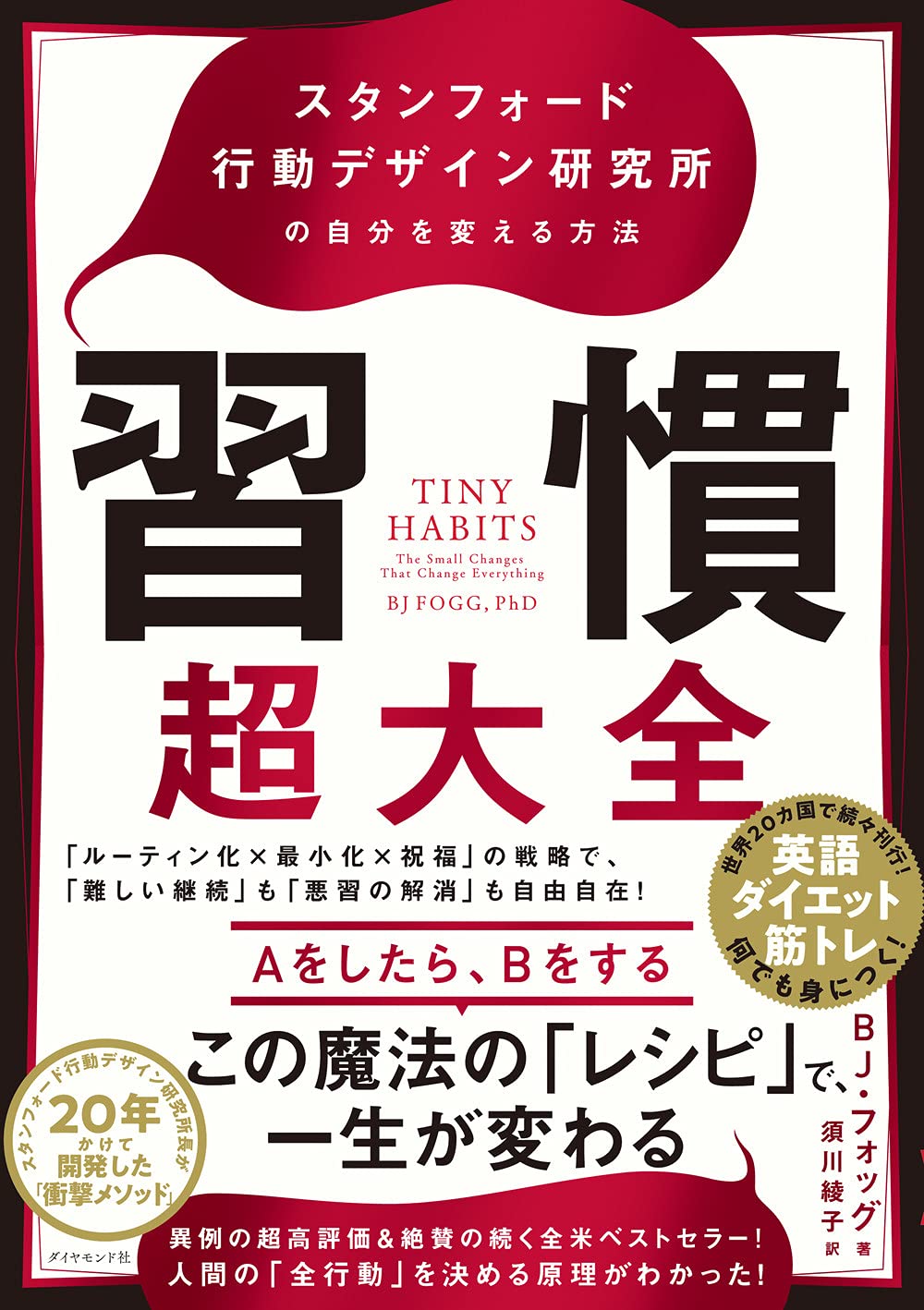
習慣超大全——スタンフォード行動デザイン研究所の自分を変える方法
BJ・フォッグ, 須川 綾子 / ダイヤモンド社 / 2021-05-26
★米AMAZON評価、驚異の3400件超、 異例の「平均4....
Summary
Changing habits is changing your life. All the books introduced here provide practical methods based on scientific research. What's important is not aiming for perfection but starting small and continuing. Small daily improvements will bring remarkable results in the long term. Find a method that suits you and take that first step today.